
Relay Testing, Programming, and Commissioning: Protecting Electrical Systems
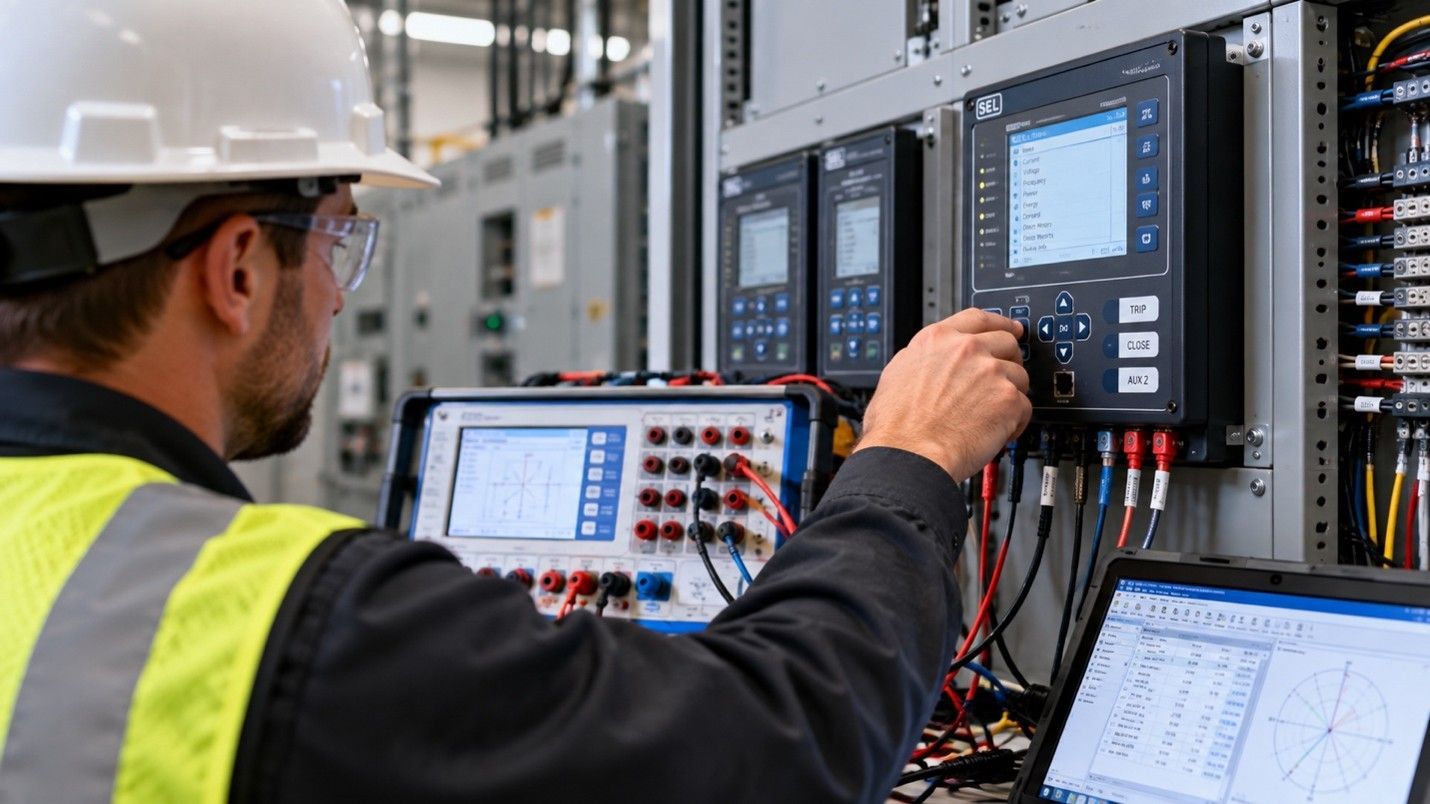
Modern electrical systems rely on more than breakers, transformers, switchgear, and conductors to safely distribute power. Behind these components are protective relays designed to continuously monitor electrical conditions and respond when something goes wrong.
But a protective relay can only provide the protection it was designed for when it is properly configured and verified.
Relay testing, programming, and commissioning help ensure protective relays operate according to the system design, recognize abnormal electrical conditions, and initiate the correct response when required.
For industrial facilities, manufacturing plants, data centers, utilities, and other mission-critical operations, proper relay testing and commissioning can be an essential part of building a reliable electrical distribution system.
What Are Protective Relays?
Protective relays monitor electrical conditions within a power system and are designed to initiate protective actions when specified conditions are detected.
Depending on the application, a relay may monitor current, voltage, frequency, phase relationships, differential current, or other electrical characteristics.
When the relay detects a condition outside its programmed parameters, it can send a signal to operate a circuit breaker or other protective device. This helps isolate the affected portion of the electrical system while allowing unaffected areas to continue operating when the system design permits.
That makes the accuracy of relay settings and operation critical.
What Is Relay Testing, Programming, and Commissioning?
Relay testing, programming, and commissioning encompasses the processes used to configure protective relays, verify their operation, and confirm that they interact correctly with the larger electrical system.
While these processes are closely related, each serves a different purpose.
Relay programming establishes how the device should respond to specific electrical conditions. Settings may include pickup levels, time delays, protection curves, communication functions, logic, and other parameters based on the electrical system design and coordination study.
Relay testing verifies that the relay responds correctly when simulated electrical conditions are applied.
Relay commissioning takes a broader look at the completed protection system to verify that the relay, wiring, breakers, controls, communications, and associated components work together as intended.
Why Is Protective Relay Testing Important?
Protective relays may remain in normal operating conditions for years before they are required to respond to a significant fault.
When that moment comes, the system needs to react correctly.
An incorrect setting, wiring problem, failed output, communication issue, or other problem could potentially cause a relay to operate incorrectly. Depending on the electrical system, this could result in unnecessary equipment shutdowns or failure to isolate a fault as intended.
NETA describes protective relay testing as essential to electrical power-system reliability and safety. Its relay-testing resources also highlight that real-world testing requires understanding not only relay theory but the practical challenges technicians encounter in the field.
Proper testing gives facility owners greater confidence that their protection systems will respond according to the engineered design.
What Does Relay Testing Include?
The exact testing process depends on the relay, application, equipment manufacturer, system design, and project requirements.
Testing may include:
- Verification of relay model, firmware, and configuration
- Review of programmed settings
- Current and voltage injection testing
- Pickup and dropout testing
- Timing verification
- Overcurrent protection testing
- Differential protection testing
- Ground-fault protection testing
- Input and output verification
- Trip circuit verification
- Breaker operation testing
- Communication testing
- Alarm and indication verification
- Functional testing of protection schemes
Modern microprocessor-based relays can include sophisticated logic and communication capabilities, making thorough testing particularly important.
NERC guidance also recognizes differences in testing approaches between older non-microprocessor relays and modern microprocessor-based devices.
The Importance of Proper Relay Programming
Testing can verify whether a relay follows its settings, but those settings must first be correct.
That is where relay programming becomes critical.
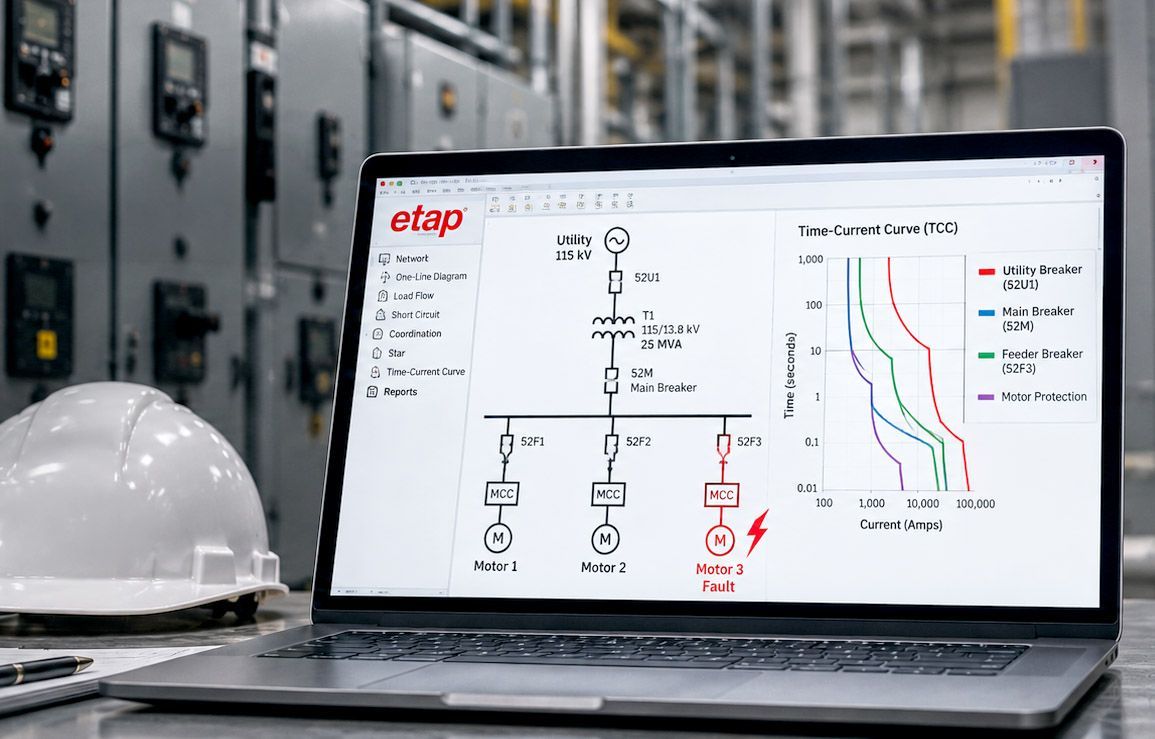
Relay settings are typically developed according to the electrical system design and applicable coordination studies. The goal is to create a protection scheme that responds appropriately to abnormal conditions while maintaining coordination with upstream and downstream devices.
For example, when a fault occurs on a downstream circuit, the system may be designed so the closest protective device clears the fault before an upstream device operates.
Incorrect programming can interfere with that coordination.
Relay programming may involve configuring protection elements, trip logic, time delays, current thresholds, voltage thresholds, communications, alarms, and other functions.
Programming should therefore be treated as part of the overall protection strategy rather than simply entering values into a device.
Relay Commissioning Before Energization
Commissioning brings installation, programming, and testing together.
Before an electrical system is placed into service, technicians can verify that the relay is communicating with the correct equipment and that its inputs and outputs perform as expected.
Commissioning may include point-to-point wiring verification, secondary injection testing, breaker trip verification, control logic testing, communication checks, and review of relay settings against approved documentation.
This process can identify problems before the system is energized.
Recore discusses the importance of this broader process in our guide to Deep Voltage System Expertise in Electrical Contracting, where testing and commissioning can include cable, transformer, switchgear, protective relay, functional, and load testing before energization.
Relay Testing and Electrical System Coordination
Protective relays do not operate independently.
They are part of a larger electrical protection system that can include switchgear, circuit breakers, transformers, current transformers, potential transformers, control power, communication networks, and other devices.
That makes system coordination an important consideration during relay testing, programming, and commissioning.
A relay may function exactly according to its programmed settings while the overall system still fails to perform as intended if wiring, communications, breaker controls, or another component has a problem.
Testing the complete protection scheme can help identify these issues before they create operational problems.
For facilities with high-voltage infrastructure, Recore's guide to High-Voltage Installations in Industrial Settings discusses the role of system commissioning before high-voltage equipment is energized.
When Should Protective Relays Be Tested?
Relay testing is important during several stages of an electrical system's life.
New installations require commissioning to confirm that equipment has been installed, programmed, and integrated properly before operation.
Existing facilities can also incorporate protective relay testing into preventive maintenance programs. Testing may be appropriate following equipment changes, protection-system modifications, relay replacement, firmware changes, unexpected trips, or major electrical-system upgrades.
NERC's PRC-005-6 standard specifically addresses maintenance programs for protection systems, automatic reclosing, and sudden pressure relaying that affect Bulk Electric System reliability.
Facilities outside the scope of NERC requirements can still benefit from a structured approach to protective-system maintenance based on applicable standards, manufacturer recommendations, system criticality, and facility requirements.
Relay Testing for Mission-Critical Facilities
For a mission-critical facility, electrical reliability can directly affect operations.
A data center, manufacturing facility, utility installation, or industrial plant may have complex distribution systems where an unnecessary trip can interrupt production or critical loads.
At the same time, protection systems need to respond correctly when an actual fault occurs.
Thorough relay commissioning helps verify this balance before equipment enters normal service.
Relay Testing, Programming, and Commissioning With Recore
Relay testing, programming, and commissioning is a critical step in developing a dependable electrical protection system.
From verifying individual relay functions to confirming breaker operation and complete protection schemes, proper testing helps ensure that electrical equipment responds according to the engineered design.
Recore brings experience in industrial electrical contracting, high-voltage systems, switchgear, testing, and commissioning to complex electrical projects.
Whether a project involves a new electrical installation, equipment upgrade, protective relay replacement, or maintenance of an existing power distribution system, Recore can help verify that critical electrical infrastructure is ready for operation.
With careful programming, comprehensive testing, and disciplined commissioning, facilities can move toward energization with greater confidence that their protection systems are configured to perform as intended.