Metal-Enclosed Switchboards: Custom Power Distribution for Industrial Facilities

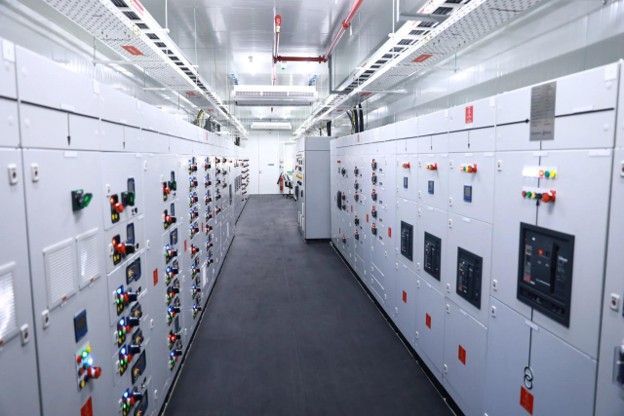
Reliable electrical distribution is critical to industrial facilities, manufacturing plants, data centers, processing operations, and other environments where downtime can have significant operational and financial consequences. At the center of many of these electrical systems are metal-enclosed switchboards designed to safely distribute power while providing the flexibility required for the facility's specific electrical infrastructure.
While standard switchboard configurations can meet the needs of many applications, complex industrial projects often require equipment designed around specific electrical loads, redundancy requirements, available space, and operating procedures.
Recore Electric supports industrial construction projects with metal-enclosed switchboards that can incorporate custom bus arrangements, main-tie-main configurations, draw-out breakers, and other project-specific features.
What Are Metal-Enclosed Switchboards?
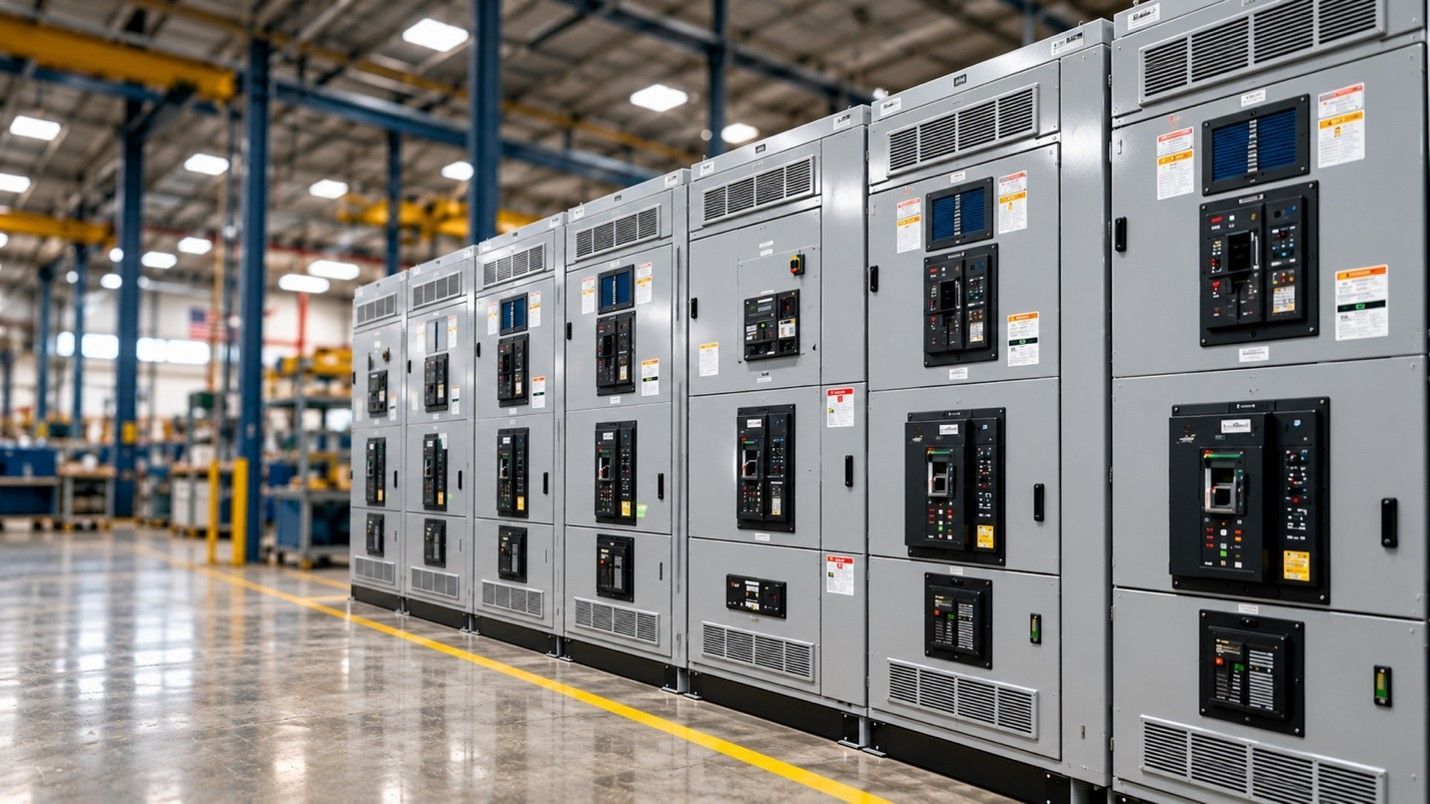
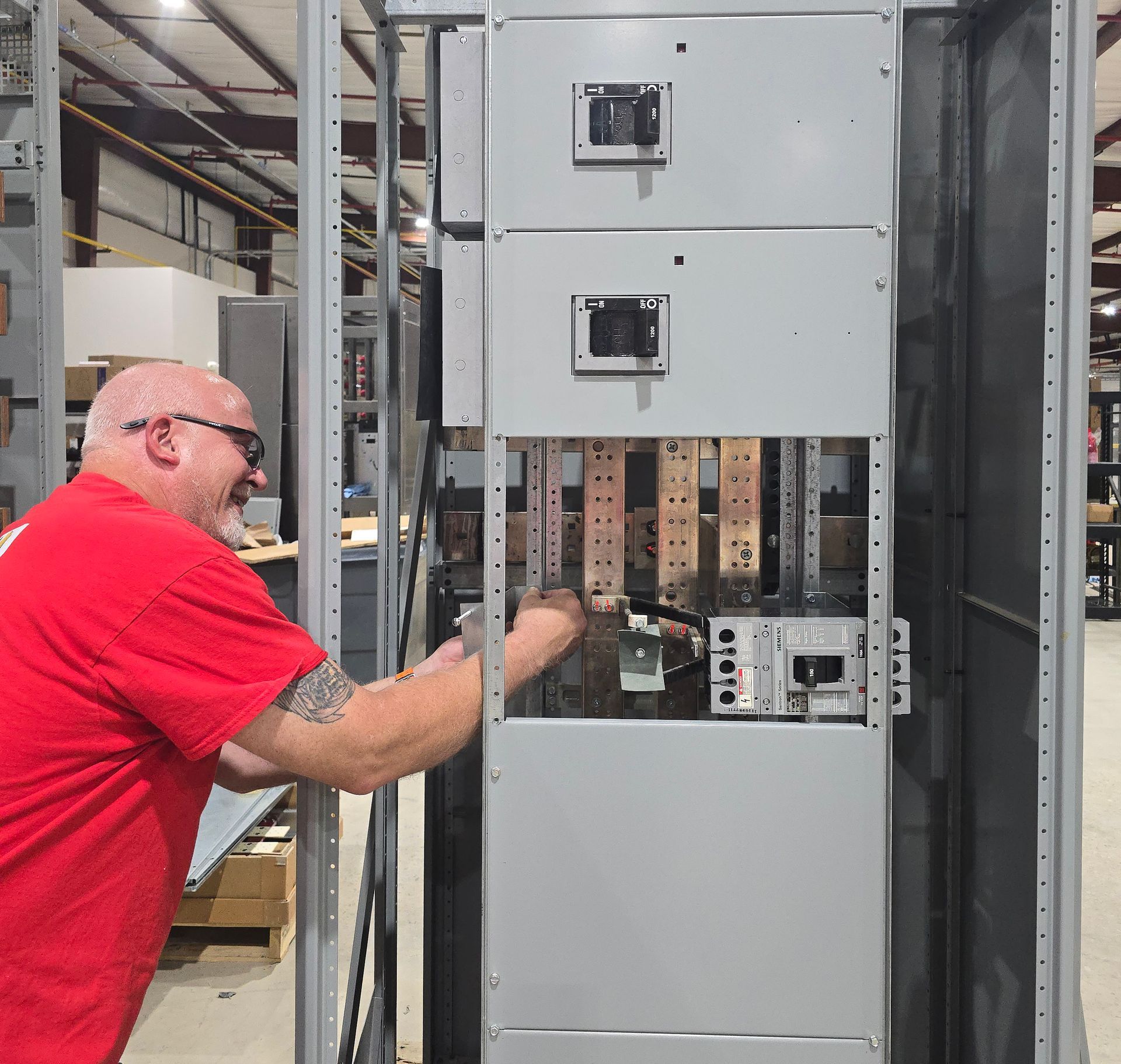
Metal-enclosed switchboards are electrical distribution assemblies that house components such as circuit breakers, bus structures, controls, metering equipment, and other electrical devices within a protective metal enclosure.
Their primary purpose is to receive electrical power and distribute it to downstream loads and equipment.
The Occupational Safety and Health Administration (OSHA) includes switchboards, circuit breakers, bus bar structures, power switching equipment, distribution boards, and control and metering panels among equipment associated with electrical power distribution. OSHA regulations also establish requirements for electrical equipment installation, guarding, accessibility, and working space.
For industrial projects, the switchboard often becomes an important connection point between the incoming electrical service and the equipment that ultimately consumes that power.
Depending on the project, that could include:
- Manufacturing equipment
- Pumps and motors
- HVAC and process equipment
- Control systems
- Production lines
- Data center infrastructure
- Building electrical systems
- Other major industrial loads
Because every facility has different requirements, the design of the metal-enclosed switchboard should be coordinated with the broader electrical system.
Custom Metal-Enclosed Switchboards for Industrial Applications
Industrial construction rarely follows a completely standardized template.
Available electrical capacity, facility layout, equipment loads, redundancy requirements, and future expansion plans can all influence how a switchboard should be configured.
Custom metal-enclosed switchboards allow electrical equipment to be designed around those requirements instead of forcing a project to work around a predetermined configuration.
Recore can support project-specific designs that incorporate custom bus, main-tie-main, and draw-out breaker configurations.
This flexibility can be especially valuable for industrial facilities where power distribution must support both current operations and long-term facility requirements.
Custom Bus Configurations
The bus system is one of the most important components inside a switchboard.
Bus bars provide a conductive path that moves electrical power through the switchboard and distributes it to breakers and downstream circuits. The size, arrangement, and configuration of the bus must correspond with the electrical requirements of the application.
Custom bus configurations allow engineers and contractors to develop equipment around factors such as:
- Required current capacity
- Number of distribution sections
- Incoming electrical service
- Feeder requirements
- Equipment arrangement
- Available physical space
- Future electrical expansion
A well-planned bus configuration can also help create a cleaner overall electrical distribution design.
Instead of adapting the facility around an off-the-shelf configuration, the switchboard can be engineered to integrate with the project's electrical drawings and equipment requirements.
Main-Tie-Main Switchboard Configurations
For facilities where power availability is particularly important, a main-tie-main switchboard configuration can provide additional operational flexibility.
A typical main-tie-main arrangement includes two main breakers and a tie breaker between separate sections of the electrical distribution system.
Under normal operating conditions, different sections of the system may be supplied independently. Depending on how the electrical system is engineered and operated, the tie breaker can provide a means of connecting sections when required.
This type of arrangement can be useful in facilities with multiple power sources or where electrical distribution flexibility is a major design consideration.
Potential applications include:
- Manufacturing facilities
- Data centers
- Critical infrastructure
- Process facilities
- Large commercial buildings
- Industrial campuses
- Facilities with redundant power sources
The exact operation of a main-tie-main system depends on the facility's electrical design, protection scheme, equipment ratings, and operating procedures.
Custom metal-enclosed switchboards allow the physical equipment to be designed specifically for these requirements.
Draw-Out Breaker Configurations
Another option for custom metal-enclosed switchboard designs is the use of draw-out breakers.
Unlike fixed-mounted breakers, draw-out breakers are designed so that the breaker can be moved between operating, test, disconnected, or removed positions as supported by the specific equipment design.
For facilities with significant electrical loads, this configuration can provide advantages related to maintenance and equipment serviceability.
Draw-out breaker configurations may help:
- Simplify breaker replacement
- Improve accessibility for maintenance
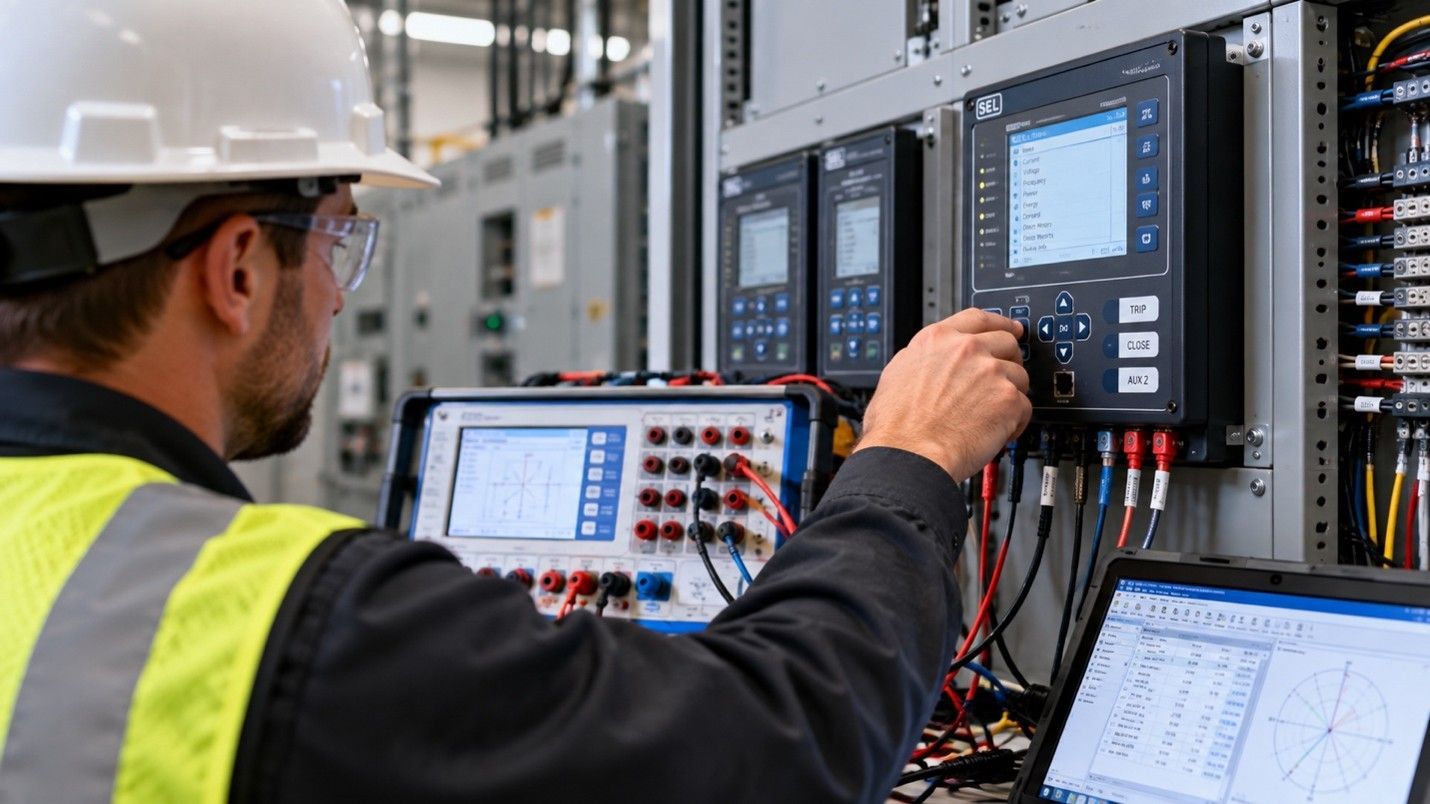
- Support testing procedures
- Reduce the complexity of servicing individual breakers
- Provide greater flexibility for facilities with critical electrical systems
For industrial owners focused on long-term maintainability, considering how breakers will eventually be inspected, tested, serviced, or replaced can be just as important as evaluating initial installation requirements.
Safety and Accessibility Matter
The design of metal-enclosed switchboards involves more than simply fitting electrical components inside an enclosure.
Equipment location and accessibility must also be considered.
OSHA establishes requirements for working spaces around switchboards and other electrical equipment. For equipment operating at 600 volts or less, required clearances vary depending on voltage and surrounding conditions. OSHA also requires illumination for working spaces around indoor service equipment, switchboards, panelboards, and motor control centers.
OSHA additionally requires conductors and equipment to have appropriate overcurrent protection based on their ability to safely conduct current.
These requirements highlight why switchboard selection should be coordinated early in the electrical design and construction process.
Equipment dimensions, access requirements, conduit routing, cable entry, room dimensions, and maintenance clearances can all affect installation.
Designing Metal-Enclosed Switchboards Around the Project
One of the biggest advantages of custom electrical equipment is the ability to coordinate the switchboard with the project instead of adapting the project to available equipment.
Early coordination between electrical engineers, contractors, manufacturers, and facility owners can help identify important requirements before fabrication begins.
Those conversations may include:
- Available fault current
- System voltage
- Main breaker requirements
- Feeder breaker quantities
- Bus ratings
- Main-tie-main arrangements
- Draw-out versus fixed breakers
- Metering requirements
- Physical dimensions
- Cable and conduit entry
- Future expansion requirements
- Installation location
Addressing these considerations early can help reduce conflicts once equipment reaches the jobsite.
Metal-Enclosed Switchboards From Recore Electric
Industrial electrical systems require equipment capable of supporting demanding operating environments.
Recore Electric's Power Systems Division supports industrial construction projects with standard and custom-designed switchboards, including project-specific metal-enclosed switchboard solutions.
Our capabilities allow switchboards to be designed around the electrical requirements of the project, including custom bus configurations, main-tie-main arrangements, and draw-out breaker configurations.
With in-house design, fabrication, assembly, and testing capabilities, Recore can coordinate electrical equipment from initial design requirements through manufacturing and delivery.
For contractors, engineers, and facility owners, that means working with a team that understands how electrical equipment fits into the larger construction process.
Whether a project requires a straightforward distribution system or a highly customized configuration, selecting the right metal-enclosed switchboard starts with understanding the facility's power requirements, operating priorities, and long-term needs.
Recore Electric can help develop a switchboard solution built around those requirements.