
Commercial Network Cabling Installation: From Design to Testing
Nearly every modern facility depends on a reliable communications network. Computers, phones, wireless access points, security cameras, access control systems, production equipment, and other connected devices all rely on cabling that must be properly designed and installed.
For facility owners, general contractors, and project managers, commercial network cabling installation is not simply a matter of pulling wires. It requires planning, coordination, professional installation, clear labeling, and thorough testing. Understanding the process can help your team avoid delays and future maintenance problems.
What Is Commercial Network Cabling Installation?
Commercial network cabling installation is the process of designing and installing the physical infrastructure that connects a facility’s communications systems. This may include copper data cabling, fiber optic cabling, equipment racks, patch panels, cabinets, pathways, and device connections.
A structured cabling system can support computers, business networks, wireless access points, phone systems, security cameras, access control devices, building automation, industrial controls, and audiovisual technology.
The result should be an organized, tested, and documented system that supports current operations and future technology needs.
The importance of this infrastructure extends beyond any individual building. The National Telecommunications and Information Administration serves as the federal agency responsible for advising on telecommunications and information policy, reflecting the central role dependable communications play in modern organizations and communities.
Step 1: Understanding the Facility’s Requirements
Every commercial network cabling installation should begin with discovery and planning. Before cable types or routes are selected, the installation team needs to understand how the building will operate.
Important questions include:
- How many employees and connected devices will the facility support?
- Where will workstations, equipment, cameras, and wireless access points be located?
- What applications will run across the network?
- Are there manufacturing, warehouse, office, or outdoor environments involved?
- Will the facility need copper cabling, fiber optic cabling, or both?
- How quickly is the organization expected to grow?
- What security, redundancy, or uptime requirements apply?
An office renovation may need workstation and wireless connectivity. A manufacturing plant may also require connections for controls, production equipment, and security devices across a much larger footprint. Identifying these requirements early allows the contractor to build the plan around the facility instead of solving gaps after construction begins.
Step 2: Designing the Cabling System
Once the requirements are established, the contractor can develop the system design. This phase determines cable types, outlet locations, telecommunications room layouts, equipment rack requirements, and pathways between spaces.
Design decisions may include whether Cat6 or Cat6A is appropriate, where fiber backbones are needed, and how much spare capacity to include. Distance, bandwidth, environmental conditions, and connected equipment influence the selection.
Pathway coordination is equally important. Cable trays, conduit, sleeves, and supports must be planned around electrical, mechanical, plumbing, structural, and fire protection systems. Early coordination can prevent field conflicts and expensive rework.
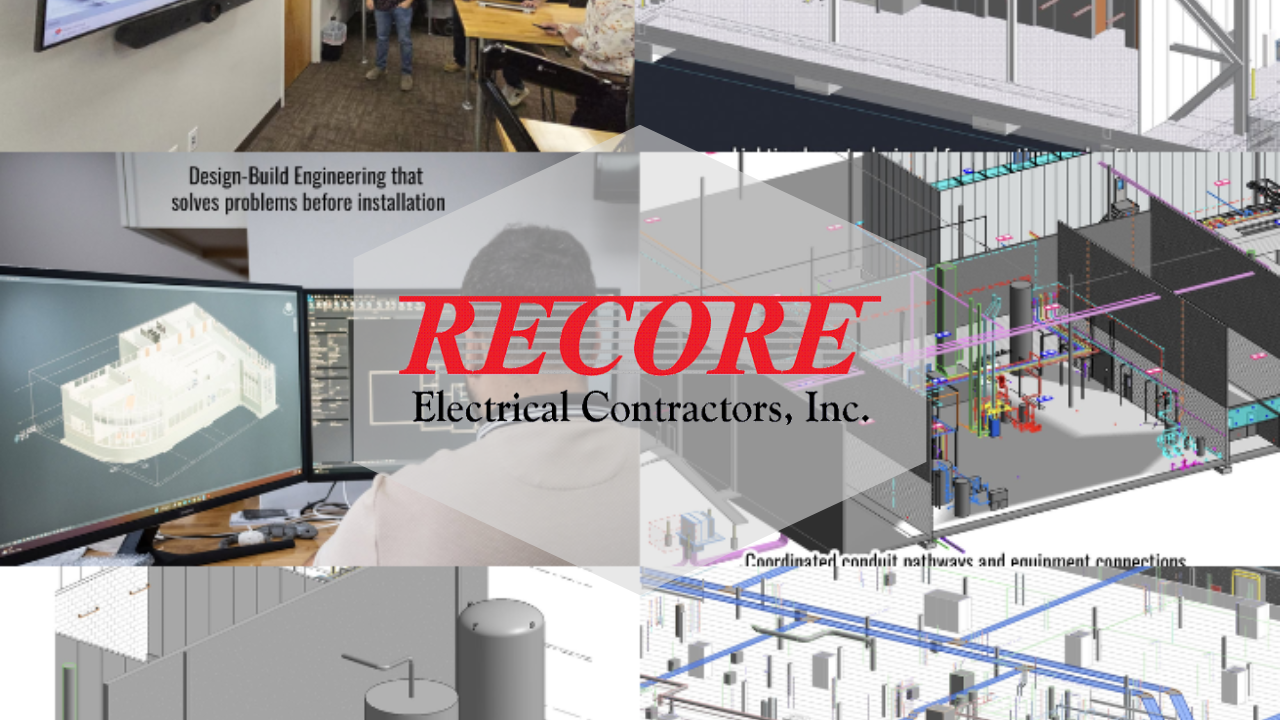
Recore’s approach to BIM coordination from the digital model to the job site shows how coordinated planning can identify routing conflicts before crews begin installation.
Step 3: Coordinating With Construction Teams
Commercial network cabling installation often takes place alongside multiple trades. The cabling contractor may need to coordinate with the general contractor, electrical contractor, IT team, security integrator, equipment vendors, and facility representatives.
The schedule must account for wall and ceiling installation, equipment delivery, power availability, and access to completed spaces. Cable pathways and telecommunications rooms must also be ready.
When communications work is considered too late, teams may discover that sleeves are missing, pathways are undersized, equipment rooms lack space, or device locations have changed. Addressing communications infrastructure during preconstruction helps keep the work aligned with the larger project schedule.
For complex industrial projects, owners may benefit from a contractor that can coordinate communications, electrical, security, and engineering requirements.
Step 4: Installing and Terminating the Cabling
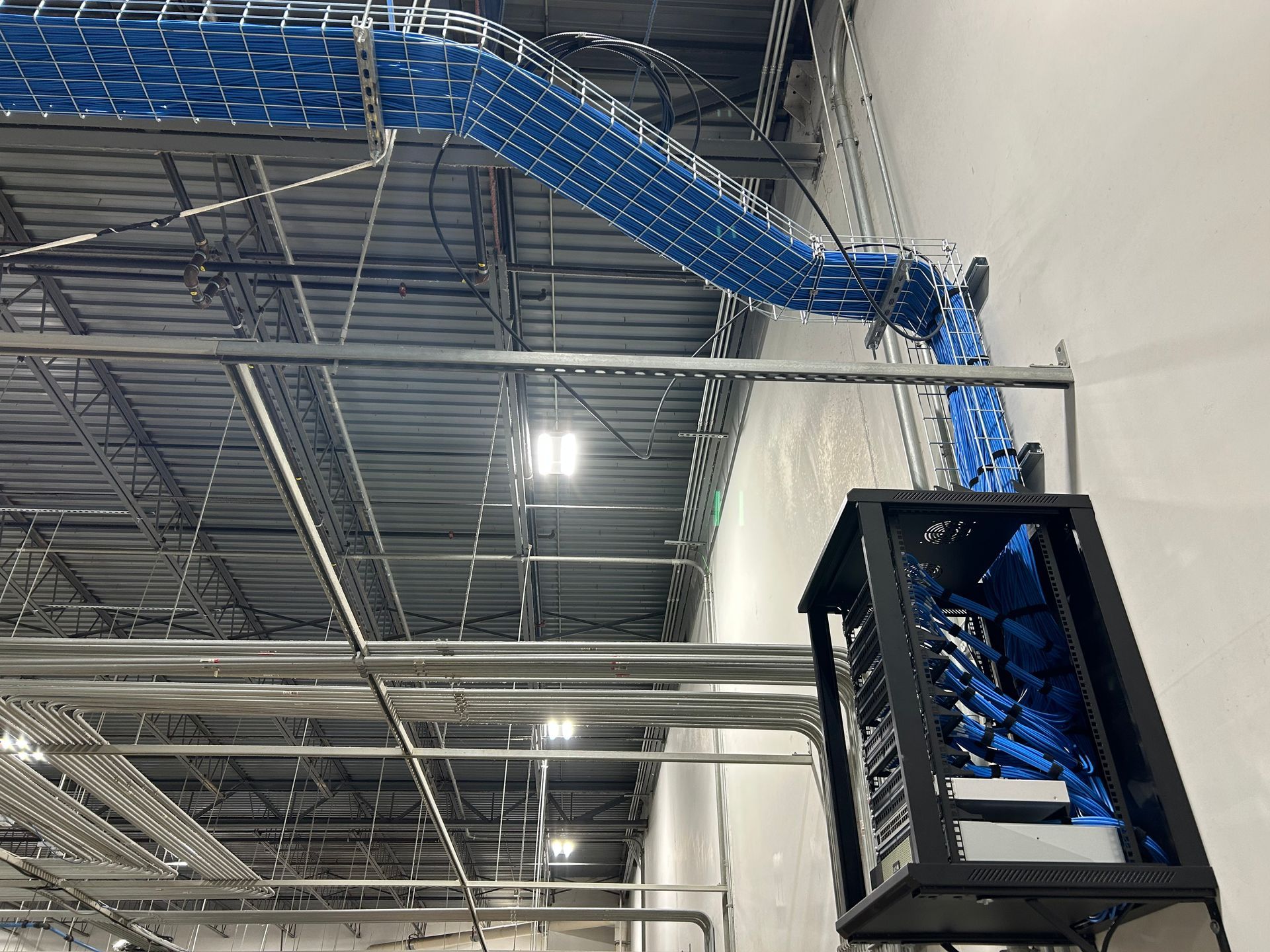
During installation, technicians route cable through the approved pathways while maintaining proper support, separation, and bend requirements. Cables are then terminated at workstation outlets, patch panels, equipment racks, cameras, wireless access points, and other devices.
Bundles should be cleanly routed, racks should remain accessible, and every connection should follow the approved design. Poor workmanship can make troubleshooting difficult and affect performance.
Jobsite safety also remains essential. The Occupational Safety and Health Administration explains that electrical standards are intended to protect workers from hazards including shock, electrocution, fires, and explosions. Although communications systems are commonly considered low voltage, installers still work around energized equipment, active facilities, lifts, ceilings, and other construction hazards. Qualified personnel and proper coordination are critical.
Recore installs systems using established products from manufacturers such as Panduit, Siemens, and Leviton. Selecting dependable components and installing them correctly helps create a system built for long-term reliability.
Step 5: Labeling and Documentation
Even a technically sound installation can become difficult to manage if cables are not consistently labeled and documented.
Each cable, outlet, patch panel port, rack, and telecommunications space should use a logical identification system. Final documentation should reflect the completed installation.
Accurate records help facility and IT teams locate connections, troubleshoot problems, add devices, plan expansions, and understand available capacity. Documentation is especially valuable when the employees who originally managed the installation are no longer involved.
Step 6: Testing the Completed Installation
Testing confirms that installed cabling performs as intended. The exact process depends on the cable type and project specifications, but it may include checking continuity, wire maps, cable length, signal performance, loss, and termination quality.
The contractor should correct failed connections before turnover and provide test results to the customer. This confirms that each link has been checked before occupancy.
Testing is also important for systems that depend heavily on the data network. Modern CCTV surveillance systems, for example, may rely on network infrastructure for video transmission, recording, remote access, and device connectivity.
What Should You Expect at Project Turnover?
At the end of a professional commercial network cabling installation, the customer should receive updated drawings, labeling information, test results, product documentation, and warranty details.
The team should review open items, demonstrate the organization of racks and patch panels, and confirm that the system matches the approved scope. It is also the right time to discuss future service, additions, and maintenance.
Choose a Commercial Network Cabling Installation Partner
The quality of a facility’s network depends on the infrastructure behind it. Careful design, construction coordination, professional installation, labeling, documentation, and testing all contribute to a system that is easier to operate and expand.
Recore provides complete security and communication system services for commercial and industrial facilities. Our qualified team works with trusted manufacturers and supports projects ranging from full facility design and installation to communications repairs and system expansions.
If you are planning a new facility, renovation, expansion, or network upgrade, contact Recore to discuss your commercial network cabling installation requirements.